
藍の色の奥で
人と微生物と暮らしが
静かに関係を結んできたように
この一冊も
読む方それぞれの時間に
言葉になる前の感じる時間に
静かに触れるものでありますように
『 藍の時間。』
手と手のあいだの十一年、新しい色へと
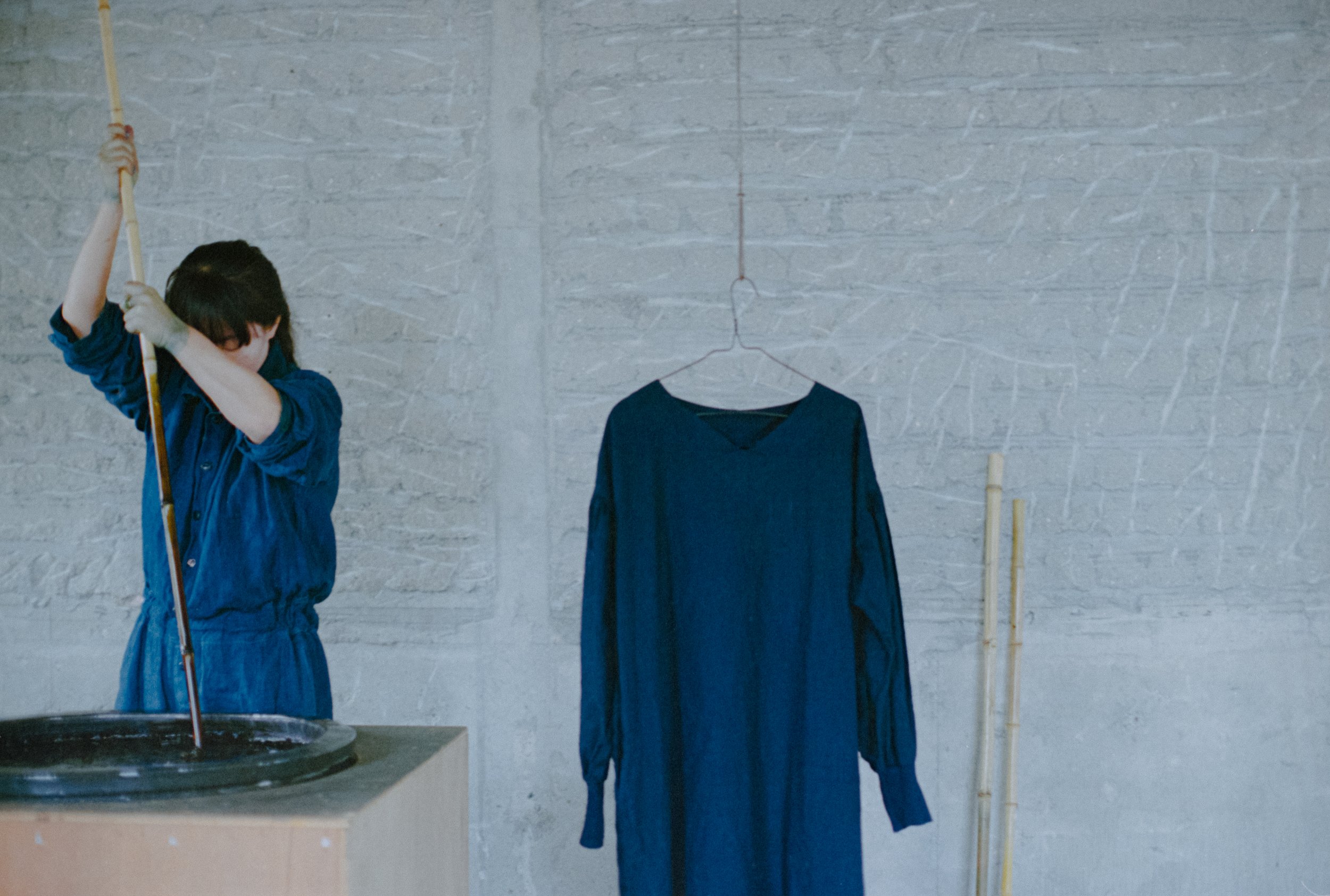
私は、藍染の技術を学びに行ったわけではなかった。
何かの答えを教えてもらおうとしていたのでもない。
ただ、あの深い藍の色の奥に、
長い時間をかけて積み重ねられてきた何かがあるように思えて、
それを自分の感覚で確かめたかった。
2025年
私は「農作業のための衣」を作るため、
その衣服を藍で染めるため、
滋賀県湖南市下田にある一軒の紺屋へ通い始めた。
昭和9年生まれ。
大正から続く藍染の家系の4代目。
私は親しみを込めて、その人を「お父さん」と呼んでいた。
お父さんは、藍染について多くを語る人ではなかった。
「教えてあげる」という姿勢を、ほとんど見せなかった。
けれど、甕の前に立つ背中や、
毎日繰り返される所作、
そして言葉のない時間そのものが、
いつの間にか私の中に残っていった。
そこには、説明はなかったが、
確かな気配があった。
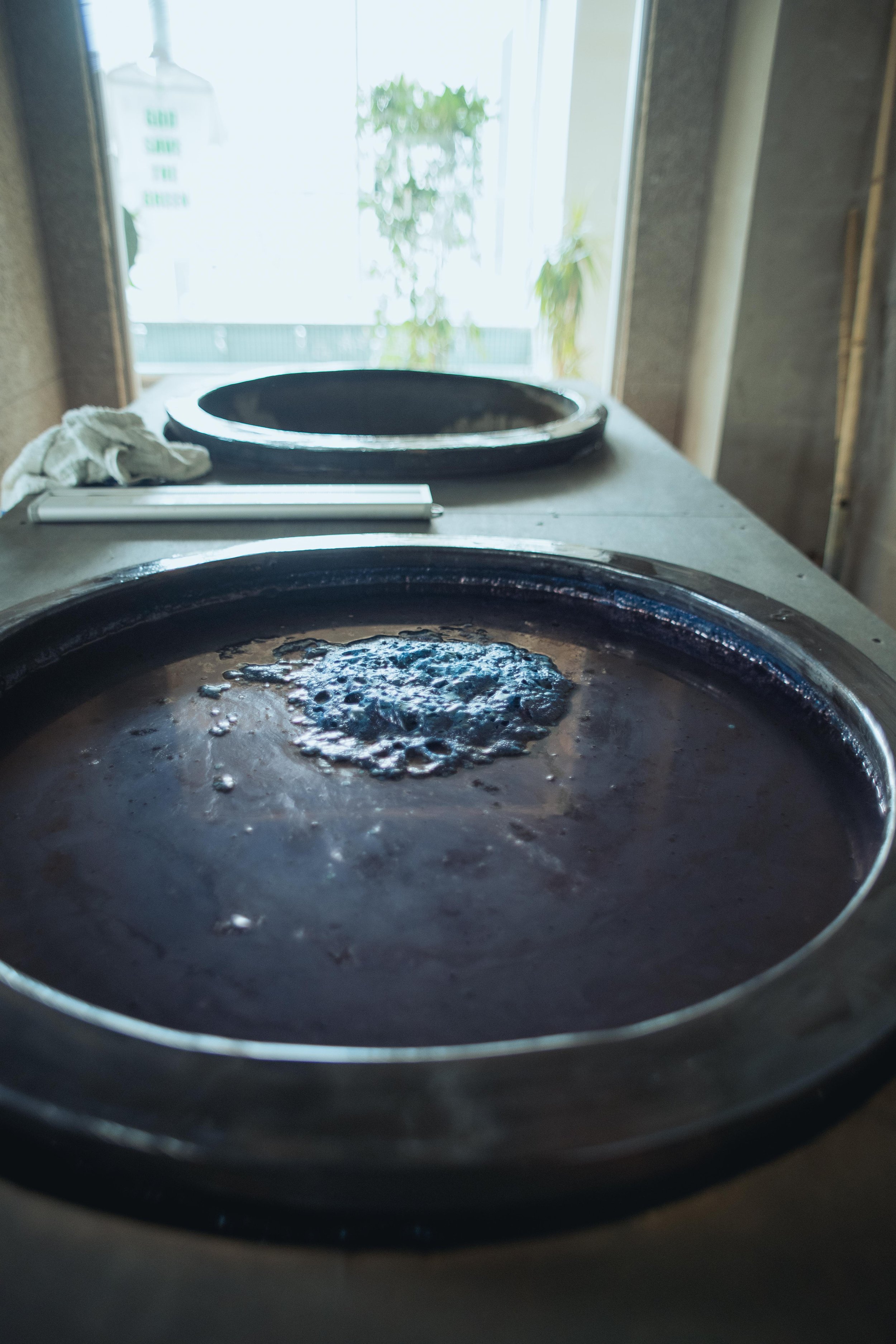
甕の中で働く微生物の気配。
長い年月を経て吸い込んだ家屋の空気。
人と人との間に保たれた、近すぎない距離。
私は、藍の色よりも先に、
その場に流れている空気に惹かれていたのだと思う
「見て学ぶ」「感じ取る」
その言葉の意味は、理解するというより、
静かに身体に馴染んでいくものだった。
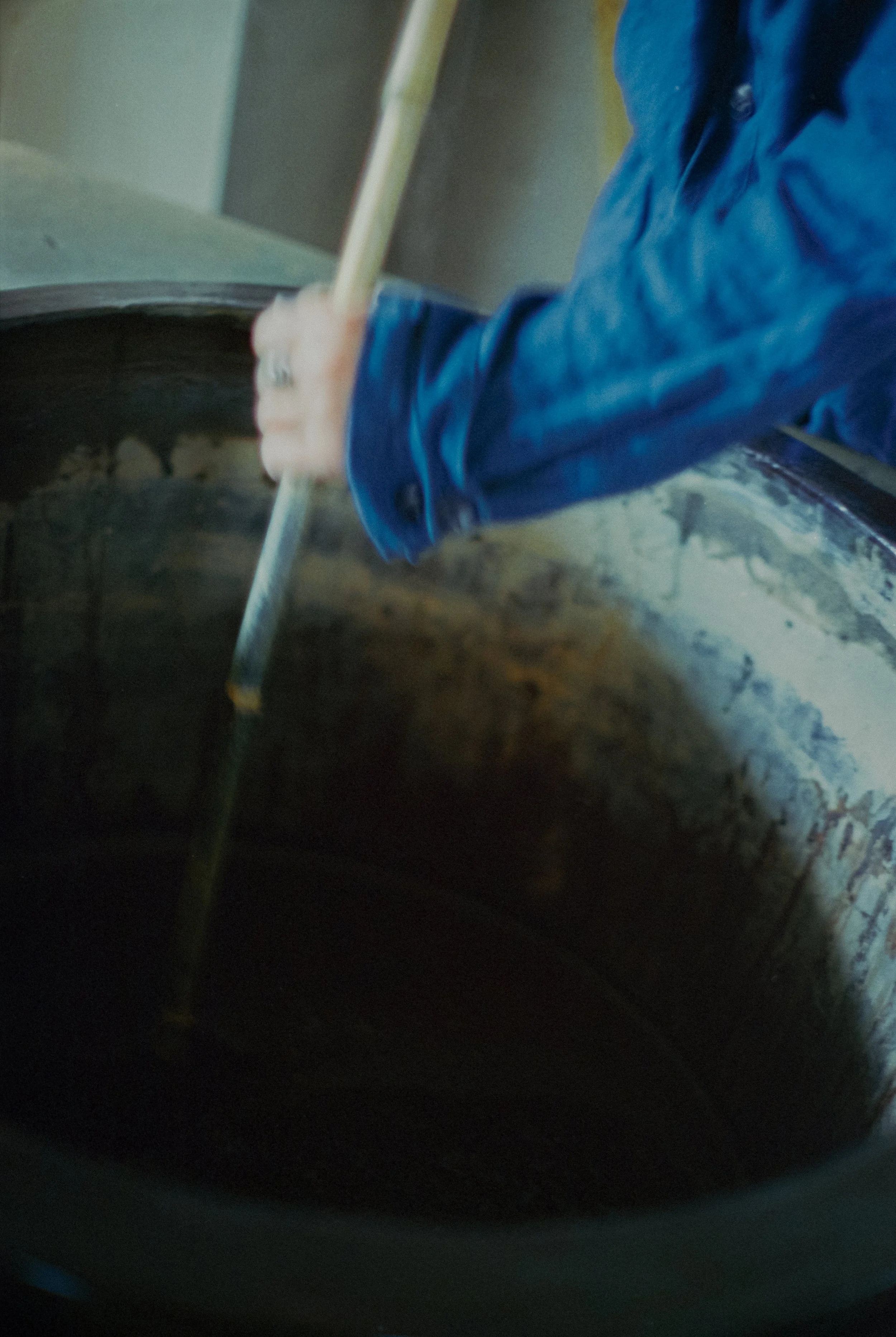
この本は、藍染の技法書ではない。
何かを成し遂げるためのマニュアルでもない。
ひとりの職人の暮らしと、
その中で育まれてきた時間や微生物の営み、
そして、それを受け取った私自身の記憶を綴った記録である。
言葉にしようとするとこぼれ落ちてしまうもの。
けれど確かに、誰かから誰かへと手渡されていくもの。
これは『感覚の継承』のようなものだと思っている。
ものづくりの背景にある時間を知りたい人へ。
目に見えないものを、深く感じたい人へ。
これから藍に触れたいと思う人へ。
そして、
ここまで関わってくださったすべての方々、
植西家の皆様へ、心からの感謝を込めて。
この本が、
藍に想いをはせて
少し立ち止まって深呼吸をするような、
そんな時間をもたらす一冊になれば幸いである。
Preface
My objective was not to learn the skill of Aizome.
Neither was it to be taught the answer to something.
Yet through the deep indigo
I felt there was something that had been accumulated over vast amounts of time.
I needed to confirm it with my own hands.
2015
To make garments for farm work,
To dye those garments indigo,
I started to frequent a dyer in Shiga prefecture, Konan city Shimota.
Born on the 9th year of Showa.
The fourth successor to a family line of Aizome craftsmen continuing from the Taisho era of Japan.
I called this person with familiarity my “otosan” (father)
Otosan was not a person who spoke a lot about his work.
He barely took a role of a teacher.
However, his form standing in front of the indigo dyeing pot, the routine process of his day, and the time spent not uttering a word had stuck with me.
There was no explanation but there was a definite presence.
The presence of micro organisms laboring inside the pot.
The air in the house that had sucked in years.
The space in between each person preserved, so it would be not too close.
I think my initial attraction was to the atmosphere flowing through the place; even before the color of indigo.
“Watch and learn “
“Feel”
Rather than understanding them,
The meaning of those words quietly blended into me.
This book is not intending to teach the technique of Aizome, nor a manual to succeed.
It is a recording of life with a craftsman,
of the time nurtured, the lifework of microorganisms, and what I have received through my memories.
It is something that spills when you try to put it into words but certainly passes from one person to another.
I see this as somewhat a “succession of feeling”.
For people who want to know the background of a craft.
For people who want to feel deeply something that cannot be seen.
For people who might want to try “Ai”.
My deepest gratitudes
To all who have been a part of this thus far
And to the Uenishi family
It would be appreciated if this book creates a moment to take a deep breath and think about “Ai”.
Préface
Je n'y suis spécialement pas allée pour apprendre les techniques de la teinture à l'indigo, “Aizome” en Japonais.
Je ne cherchais pas non plus de réponses précises.
Je ressentais simplement qu'il y avait quelque chose de profond dans cette riche couleur AI(indigo), quelque chose qui s'était construit au fil du temps, et je voulais le ressentir intensément.
En 2015
J'ai commencé à fréquenter une teinturerie (AIZOME) à Shimoda, Konan, dans la préfecture de Shiga qui confectionne des vêtements pour les travaux agricoles et les teint à l'indigo.
Né en 1934, le propriétaire appartenait à la quatrième génération d'une famille de teinturiers spécialisé dans AIZOME(l’indigo) depuis l'ère Taisho (1912-1926). Je l'appelais affectueusement « OTOUSAN=Papa ».
Il ne parlait pas beaucoup de son travail et il se comportait rarement comme un maître enseignant. Ce qui me reste en mémoire, c'est son silence, sa façon de bouger, le dos tourné lorsqu'il se tenait près des cuves d'indigo.
Il n'y avait pas de mots échangés, mais une présence indéniable.
Celles aussi des micro-organismes à l'œuvre dans les cuves, l'air d'une maison imprégnée de ces organismes vivants depuis des années, une distance respectueuse entre les êtres.
Je crois que j'étais attirée par cette atmosphère qui régnait en ce lieu, avant même la teinture AI(indigo).
« Voir et apprendre », « ressentir »,
le sens de ces mots m'échappait, mais il s'est insidieusement ancré en moi.
Ce livre n'est pas un manuel sur les techniques de AIZOME.
C'est le récit de la vie d'un artisan, du temps et de la vie microbienne qui s'y sont développés, et de mes propres souvenirs liés à cette expérience.
Quelque chose qui échappe aux mots. Mais quelque chose qui se transmet assurément de personne à personne.
Je crois qu'il s'agit d'une sorte «d'héritage de sensations»,
pour celles et ceux qui veulent connaître le processus du temps qui se cache derrière la création de toutes choses.
Pour celles et ceux qui veulent ressentir profondément les êtres invisibles.
Pour celles et ceux qui veulent découvrir l’ AIZOME pour la première fois.
Avec toute ma gratitude à toutes les personnes qui ont contribué à ce projet, et à la famille Uenishi.
J'espère que ce livre offrira Un instant pour faire une pause, respirer profondément et réfléchir à la teinture indigo.
https://youtu.be/YBmJQeUvSdg
手と手のあいだの十一年、新しい色へと